
Cheyenne County VINELink Coverage
Kansas VINE is a free, confidential, voluntary custody-status and notification service described by the Kansas Attorney General. It offers online, telephone, and mobile access with operator help. Its Kansas scope is specific to offenders housed in county jails. The state expressly says it does not include KDOC offenders housed in state prisons.
That split is vital in Cheyenne County because the Sheriff publishes no local roster or recent-release feed. VINELink can bridge part of the notification gap for a local booking when the record is in a participating county-jail feed. It cannot replace KASPER for a person sentenced into state custody, and it cannot supply a certified Sheriff release record.
The automated Kansas VINE number is 1-866-574-8463. TTY access is listed at 1-866-847-1298. The live interface can change, so follow the choices shown during the search and registration.
Search Cheyenne County Inmates on VINELink
Start at VINELink and choose Kansas. Search one person at a time. Name spelling, aliases, transfer timing, and the reporting facility can affect a result, so use an identifier when the interface offers one and compare every available detail.
- Select Kansas and open the offender search.
- Enter the first and last name or an identifier offered by the live form. Try supported partial-name options if necessary.
- Open a possible match and compare the name, reporting facility, status, and event information.
- If more than one person matches, use the facility and lawful identity details to avoid choosing the wrong record.
- Record the exact status phrase and timestamp. Do not translate a transfer into community release.
- Call the actual custodian when a formal or time-sensitive confirmation is needed.
A no-result means only that the searched system did not return a match at that time. Check spelling, state, reporting agency, and whether the person entered KDOC, federal, or immigration custody. The Cheyenne County release search explains the full cross-system path.
The live VINELink interface provides the Kansas selection and person-search controls.
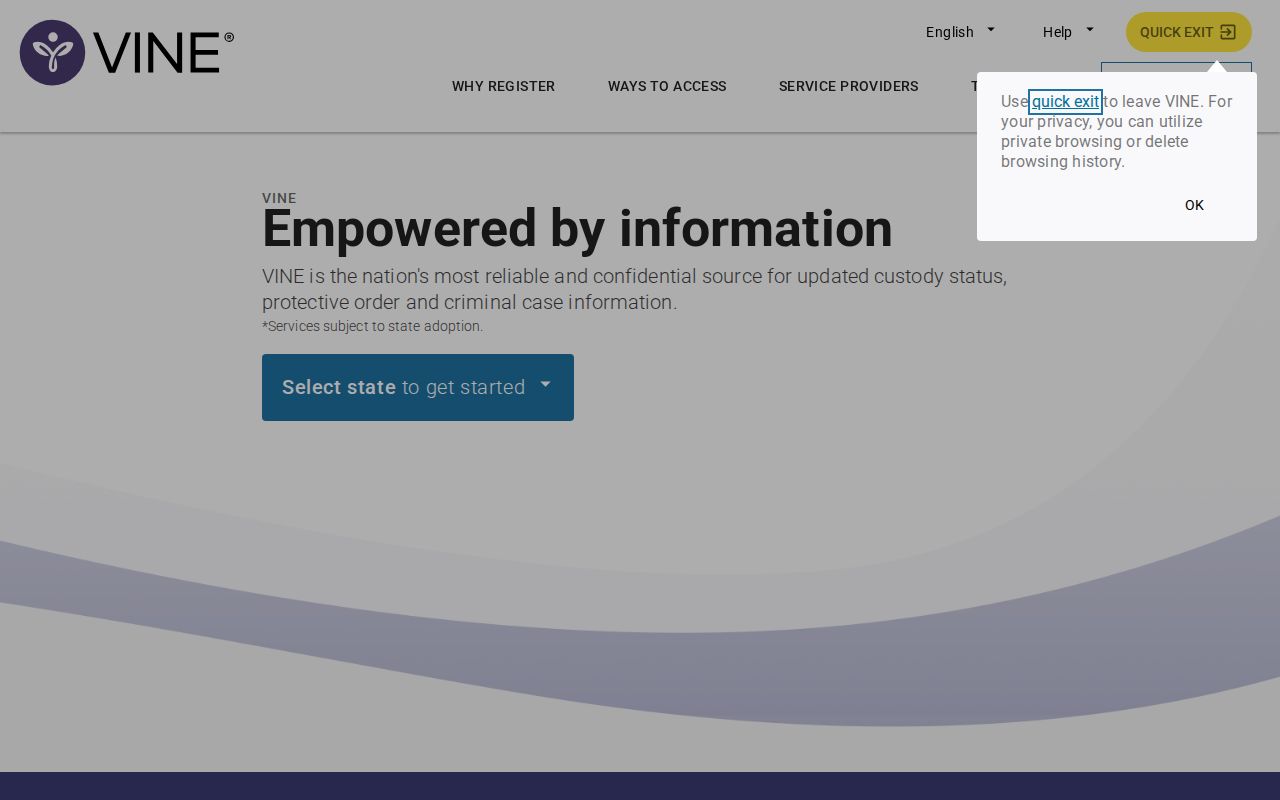
The captured interface shows the statewide entry point, while the reporting facility and event still require verification.
Cheyenne County VINELink Release Fields
The fields available depend on the county-jail feed and current interface. Read only what the record displays. Kansas VINE is notification information from a participating source, not the jail’s full booking and release document.
| Result field | How to read it |
|---|---|
| Name or offender identity | Used to match the record to the intended person. |
| Reporting facility or agency | Identifies the custodian feeding the event. |
| Custody status | States the current status language supplied through VINE. |
| Custody event | May describe a release, transfer, or other reported change. |
| Event date or timestamp | Shows when the displayed event was reported or recorded. |
| Registration control | Opens available notification choices for that located record. |
Do not expect a KDOC anticipated release date in this county-jail service. KASPER is the state corrections source for an anticipated date, movements, location, supervision level, parole office, conviction information, photograph, and discharge status. A projection may change, while a VINE event is still subject to feed timing.
Register Cheyenne County Release Alerts
Registration is tied to a located in-custody record. Select the notification control on the matching result, then choose from the delivery options currently offered. Kansas materials describe phone, email, text, and in-app choices, but availability can change.
- Confirm the record belongs to the correct person and county-jail custodian.
- Select notification or registration from that record.
- Choose a delivery method and enter the requested contact details.
- For telephone registration, create the required four-digit PIN and retain it.
- When an automated call arrives, listen and enter the PIN followed by the pound sign to acknowledge the event.
- Review each alert’s exact event language and verify it with the agency when the distinction matters.
The Kansas VINE brochure states that acknowledgment stops repeat calls for that event. It also says email registration does not require a PIN and describes one email for a custody-status change. Never share a PIN in a public post or unrelated message.
Cheyenne County’s VINE Notification Gap
Kansas VINE’s county-jail-only scope is a distinctive local issue. Cheyenne County has no public Sheriff release list, so VINE is the main online and mobile notification layer for a participating local custody record. At the same time, its KDOC exclusion means a state-prison sentence breaks that route.
Use KASPER when the court or Sheriff says the person entered KDOC. Search by KDOC number when known, or match a name result through conviction county, case number, date of birth, physical description, and photograph. Read “released to supervision” separately from “Discharged.” The former means the person remains under a correctional status; the latter means the sentence and supervision have ended.
Confirm Cheyenne County VINELink Results
VINELink does not cover BOP inmates, ICE detention, or all county-to-state movements. Data can lag. Spelling and scope can also produce a non-result. The Cheyenne County Sheriff’s underlying record is stronger for the exact local exit time, type, and receiving agency. Call 785-332-8880 and ask for the last custody event rather than asking only whether the person is there.
For written proof, request the existing booking and release record under the Kansas Open Records Act. Ask for the booking number, booking time, release time, authority, and destination if the event was a transfer. A court order can explain the legal basis but may not show the door-out time.
- Release
- The holding agency’s physical custody ends, though a case or supervision may continue.
- Transfer
- Another agency receives the person, so confinement continues.
- Parole or postrelease
- State-prison housing ends while KDOC supervision remains.
- Discharge
- The KDOC sentence and supervision obligation end.
Cheyenne County Custody Beyond VINELink
A federal sentenced prisoner belongs in the BOP Inmate Locator. A federal pretrial detainee may be under USMS authority, which has no comparable public historical released-person search. Use the federal court docket and identified detention facility. An ICE transfer routes to the Online Detainee Locator or ERO.
The Kansas offender registry is separate as well. It covers only people with a statutory duty to register, not everyone released from jail or prison. Registry absence cannot show that a person remains confined or was released. Each source answers a narrow question.
Note: Save the check time and exact label from any dynamic tool, then cite the custodian’s record when the sources conflict.
Cheyenne County VINE Phone Alerts
Telephone registration needs special care because the four-digit PIN acknowledges the call. Listen to the full automated message. Enter the PIN followed by the pound sign as the Kansas brochure directs. That action stops repeat calls for the reported event. It does not certify the underlying record or mean every later custody change will be reported by the same agency.
Keep the PIN private and make sure voicemail settings will not block the call. If a message is unclear, use the automated line or operator support, then contact the named custodian. A transfer alert should prompt a search of the receiving agency. It should not be described as community release merely because the sending jail ended its custody.
Email does not use the telephone PIN. The state brochure describes one email for a custody-status change. Text and in-app options are also described by current state material. Always follow the live form because channels and interface controls may change.
Cheyenne County KDOC Notification Route
KDOC maintains a separate Victim Services notification process for people in a KDOC facility or under KDOC supervision. It is not the same as county-jail VINELink registration. KDOC says its direct notification is unavailable when a person is only in county jail, on probation, or in community corrections without KDOC supervision.
First establish custody. If the Sheriff reports a transfer to KDOC or the court imposed a state sentence, search KASPER. Use a KDOC number when known because it is more reliable than a name. Match the conviction county and case number, then read the current status, movements, anticipated date, and supervising office. KASPER updates on working days and is not a certified release document.
A community-corrections data limitation also matters. KDOC reports that certain community-corrections events after April 21, 2021 cannot currently be displayed in KASPER. Direct agency confirmation is therefore needed for current facts when the public record is incomplete.
Read Cheyenne County Custody Alerts
Custody alerts should be read as event notices, not case outcomes. Bond release can leave a criminal case pending. A dismissal may explain why custody authority ended, but the jail event gives the physical exit. Transfer to another county, KDOC, USMS, or ICE means the person remains in custody somewhere else.
Use the Cheyenne County court docket to find the bond, dismissal, sentence, probation, or revocation order. Then compare it with the Sheriff or receiving agency record. If the event involves a parole hearing, remember that a hearing list is not a release result. A later KASPER status change or formal Prisoner Review Board action is needed.
Keep the person match narrow and respectful. Names can be shared. Compare identifiers before treating an alert as belonging to the intended person. Do not republish private contact data used for notification registration.
When an alert and a phone response differ, note when each was obtained and which agency supplied it. Ask the custodian for the existing event record rather than asking VINE to resolve the jail’s source data. A later transfer, corrected identity, or feed delay may explain the conflict. Until then, report the status as unconfirmed. The originating agency’s release or transfer record is stronger evidence than an automated notice viewed without its custody context.
Save the displayed event label and reporting facility. Those details help the custodian identify the exact feed entry when follow-up is needed.
Public Record Search
Sponsored Results