
Cheyenne County Supervision Types
Parole, postrelease supervision, and probation are not interchangeable. The Kansas Department of Corrections, or KDOC, supervises people released from state prison on parole, conditional release, or postrelease supervision. The Kansas Prisoner Review Board makes parole and certain revocation decisions. It is not the office that handles routine reporting.
Probation is ordinarily ordered by a district court instead of a prison term, or after a jail sanction. Cheyenne County lies in Kansas’s 15th Judicial District. Court Services and community corrections are the relevant judicial channels. The sentence or probation order identifies which route applies. Search results for the similarly named Colorado judicial district are not Kansas records.
| Status | Source | What it means |
|---|---|---|
| Parole | KDOC and Prisoner Review Board | Release from an indeterminate prison sentence under conditions. |
| Postrelease supervision | KDOC | A supervision term that follows the prison portion of many Kansas sentences. |
| Probation | District court, Court Services, or community corrections | A court-ordered community sentence or status, not parole from prison. |
| Discharged | KDOC or the sentencing court | The relevant sentence and supervision obligation has ended. |
- Conditional release
- A statutory release point for some older Kansas sentences, subject to supervision.
- Absconder
- A person whom the supervising authority alleges failed to remain in required contact or location.
- Revocation
- A formal action that can cancel community supervision and return a person to custody.
- Discharge
- The end of the sentence or supervision obligation, distinct from physical release.
Check Cheyenne County Supervision
Start with the record that matches the sentence. A state-prison case belongs in KASPER, the Kansas Adult Supervised Population Electronic Repository. A court probation case belongs in the Kansas district-court search and the filed order. A county-jail release may have neither KDOC parole nor probation, so do not infer supervision from the arrest alone.
- Confirm the full name, date of birth when needed, and the Cheyenne County case number or KDOC number.
- For a KDOC sentence, search KASPER and compare the conviction county, case, photograph, physical details, location, and supervision level.
- For court probation, open the Cheyenne County docket and read the judgment, probation order, or later revocation and discharge entries.
- Identify the parole office, Court Services unit, or community-corrections office named in the official record.
- Call that office when status or routing is unclear. An office may confirm the correct channel while withholding personal case details.
The broader Cheyenne County released-inmate search explains how the Sheriff’s last-custody event, court order, and state record fit together. That chain helps prevent a transfer, jail release, and state-prison release from being treated as the same event.
Cheyenne County Regional Supervision
Cheyenne County does not advertise a separate St. Francis parole office. KDOC assigns the county to a regional contact in Hays. The official KDOC parole and community-corrections directory should be checked before a visit because the listed regional contact does not mean every supervised person reports there in person.
117 E. 13th Street
Hays, KS 67601
785-625-9192
The directory image below shows the official KDOC contact layer used for Cheyenne County supervision routing.
View the KDOC parole and community-corrections contacts.
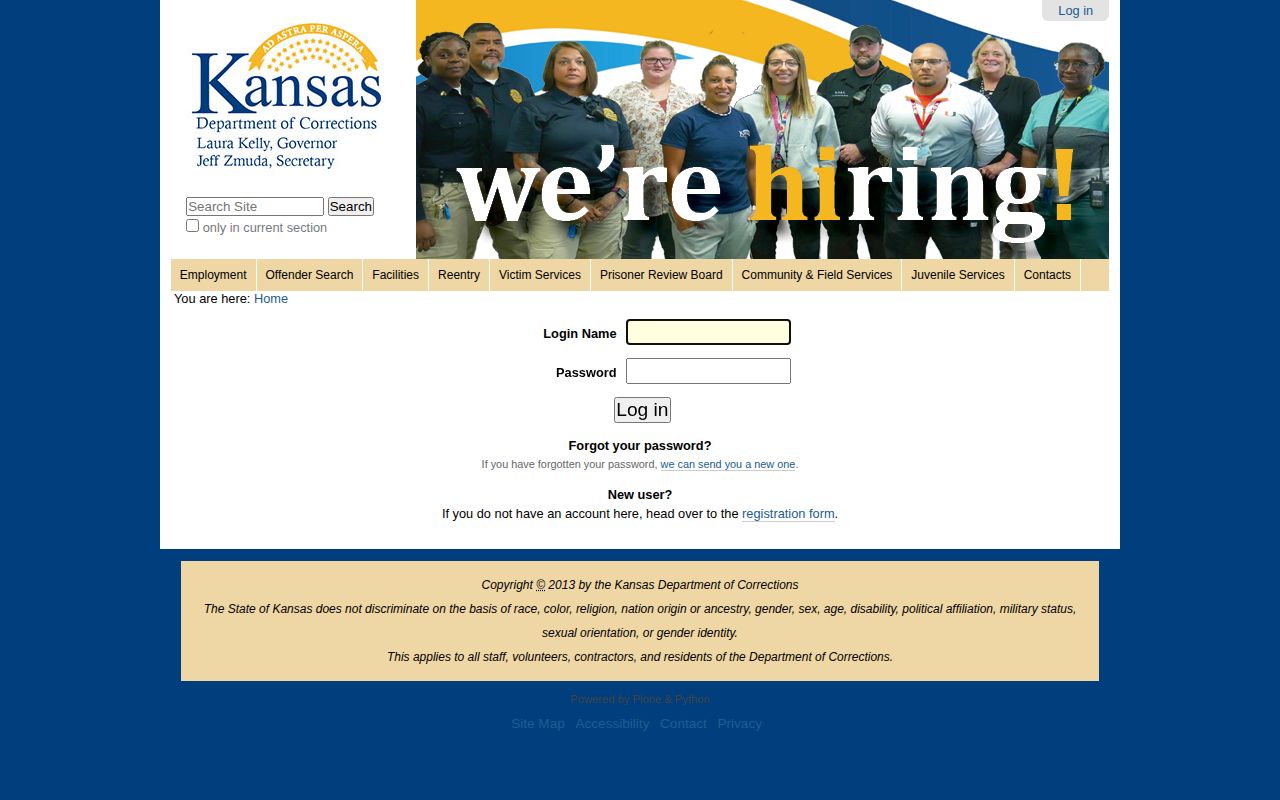
Use the live directory to confirm the current office, then use the person’s order or KASPER record to determine which agency may discuss routing.
Cheyenne County probation may instead run through Court Services or community corrections within the 15th Judicial District. The court docket and clerk can identify the order. A regional address is a verification contact, not proof of where a person lives or must report.
Cheyenne County Reentry Contacts
Regional supervision can make practical planning important after release. The Cheyenne County services directory lists local, purpose-neutral contacts such as the food pantry, county health department, hospital and clinic, and mental-health services. These listings can help a released person or family locate a starting point close to St. Francis.
Those services are not part of a court sentence, and their inclusion does not promise eligibility, open capacity, or a formal reentry program. Confirm hours, intake rules, and service areas directly. The supervising officer or court order remains the source for mandatory conditions. Community services address needs; they do not replace a parole or probation office.
Note: Cheyenne County is one of seventeen counties served by the regional community-corrections contact, so advance confirmation matters.
Cheyenne County Absconder Records
The Cheyenne County Sheriff’s public page does not publish a county warrant list. KDOC provides a separate KASPER parole absconder search and navigation for community-corrections absconders. An absconder label is an agency status. It is not proof of a new conviction, and it does not show that the person is held in the Cheyenne County Sheriff’s Office.
A county or location filter describes information in the supervision record. It does not establish a current physical location. Compare the KDOC number, identifying details, supervision type, and displayed office. Then check the court docket for a warrant, violation allegation, revocation filing, or order. If a person returned to custody, the actual custodian must confirm that event.
Open the official KASPER absconder lookup to see its live fields.
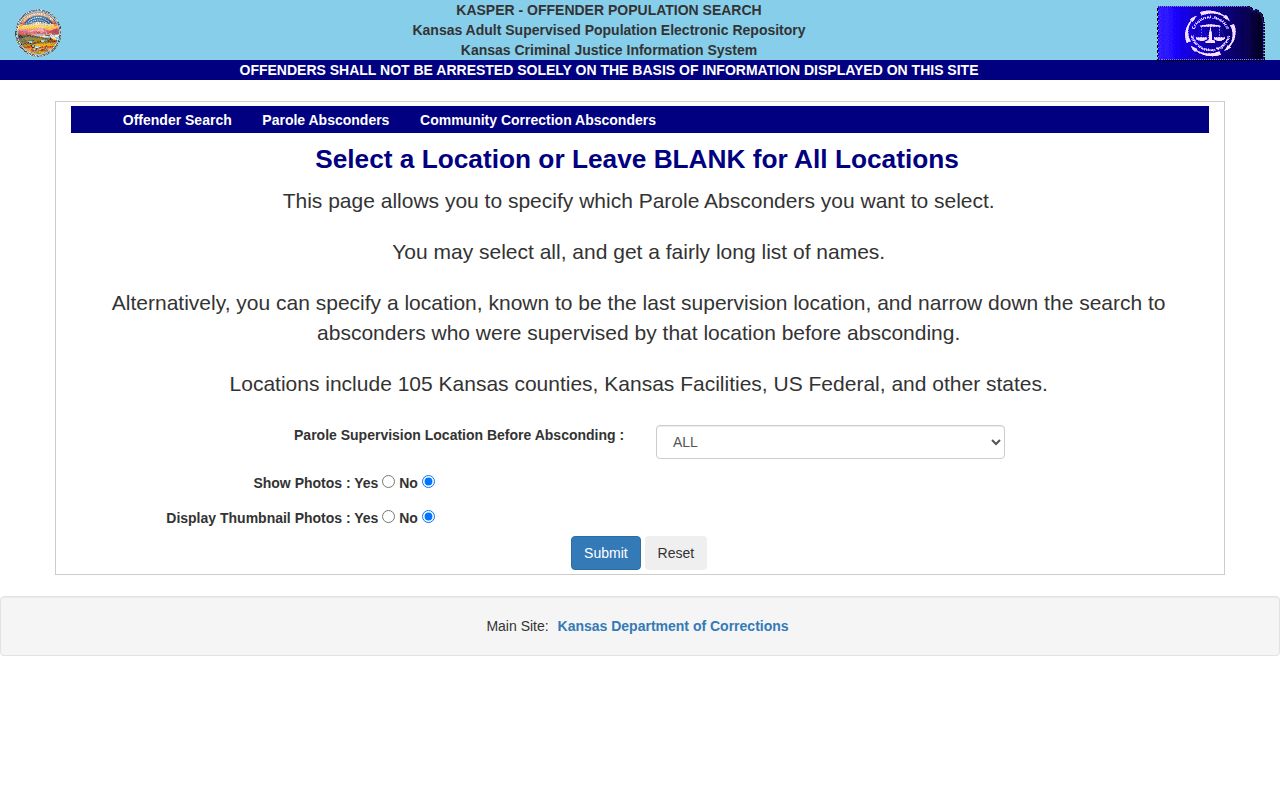
The lookup supports a focused verification, but a displayed allegation should be reported in its exact terms and checked against later court or KDOC action.
Cheyenne County Supervision Changes
Conditions vary with the sentence and order. Common categories can include reporting, travel limits, treatment, fees, or compliance with other laws, but only the actual order controls for a named person. A claimed violation begins a process. It does not prove the allegation, and it may lead to a warning, modification, warrant, hearing, revocation, or no sustained action.
KASPER is updated on working days, so a new arrest, office change, or revocation may not appear at once. Its current system also warns that some community-corrections events after April 21, 2021 cannot be displayed. Use direct agency confirmation for current facts. Kansas VINE is not the right state-prison supervision tool because the Kansas Attorney General limits it to county-jail custody.
Parole hearing lists require equal care. A public-comment date or eligibility hearing is not a release result. The Prisoner Review Board may parole, continue a decision, or pass a person for a stated interval. Check KASPER after action and request the official Board record when formal proof is needed.
The Board’s monthly public-comment process generally occurs before the eligibility hearing. A calendar entry can list the commitment name, KDOC number, county of offense, case number, and offense, yet none of those fields gives an actual exit or home address. “Continue” means the Board postponed a decision for more deliberation, facts, evaluation, or votes. “Pass” means release was denied for a stated interval. Only a parole grant followed by the custody movement supports release to supervision.
K.S.A. 22-3717 also provides notice rules tied to parole and postrelease action. Those notices can point to an official record, but public access remains subject to the Kansas Open Records Act. A Cheyenne County conviction on a Board list does not mean the person will be supervised in Cheyenne County. Verify the listed parole office after the status changes.
Cheyenne County Supervision Discharge
Supervision ends through an official discharge, expiration, or court order. For KDOC, a “Discharged” supervision type means the entire Kansas sentence obligation has ended. That is different from parole or postrelease supervision. KDOC says discharged people generally remain in KASPER unless a conviction is removed through reversal, expungement, or executive clemency.
For probation, read the Cheyenne County docket for a discharge, termination, revocation, or amended order. Do not calculate the end date from a jail exit alone. Under Kansas law, parole, conditional release, and postrelease rules depend on the offense date and sentence. K.S.A. 22-3717 cannot be reduced to one rule for every person.
When exact proof matters, request the existing KDOC discharge record or the filed district-court order. Preserve the record’s terms and date. A dynamic search is a strong starting point, while the originating agency’s final record is the stronger confirmation.
Discharge also affects some later Kansas expungement calculations. K.S.A. 21-6614 measures several waiting periods from satisfaction of the sentence or diversion, or discharge from probation, community corrections, parole, postrelease supervision, conditional release, or a suspended sentence. That makes the end of supervision a distinct legal date. It should not be replaced with the earlier jail or prison exit date.
If a public record is missing, do not conclude that discharge, expungement, or innocence has been proved. Search errors, identity mismatch, system scope, and lawful restrictions are also possible. Confirm the named case through the clerk or KDOC, and respect any sealing or expungement limit.
A formal verification request should identify the KDOC number or court case and the exact existing record sought. Ask for the discharge order, supervision status record, or filed court entry instead of asking staff to interpret the entire history. This keeps the request narrow and lets the responsible office apply lawful redactions. If the state and court records conflict, report the dates and labels to both custodians. Do not choose the result that seems most convenient.